

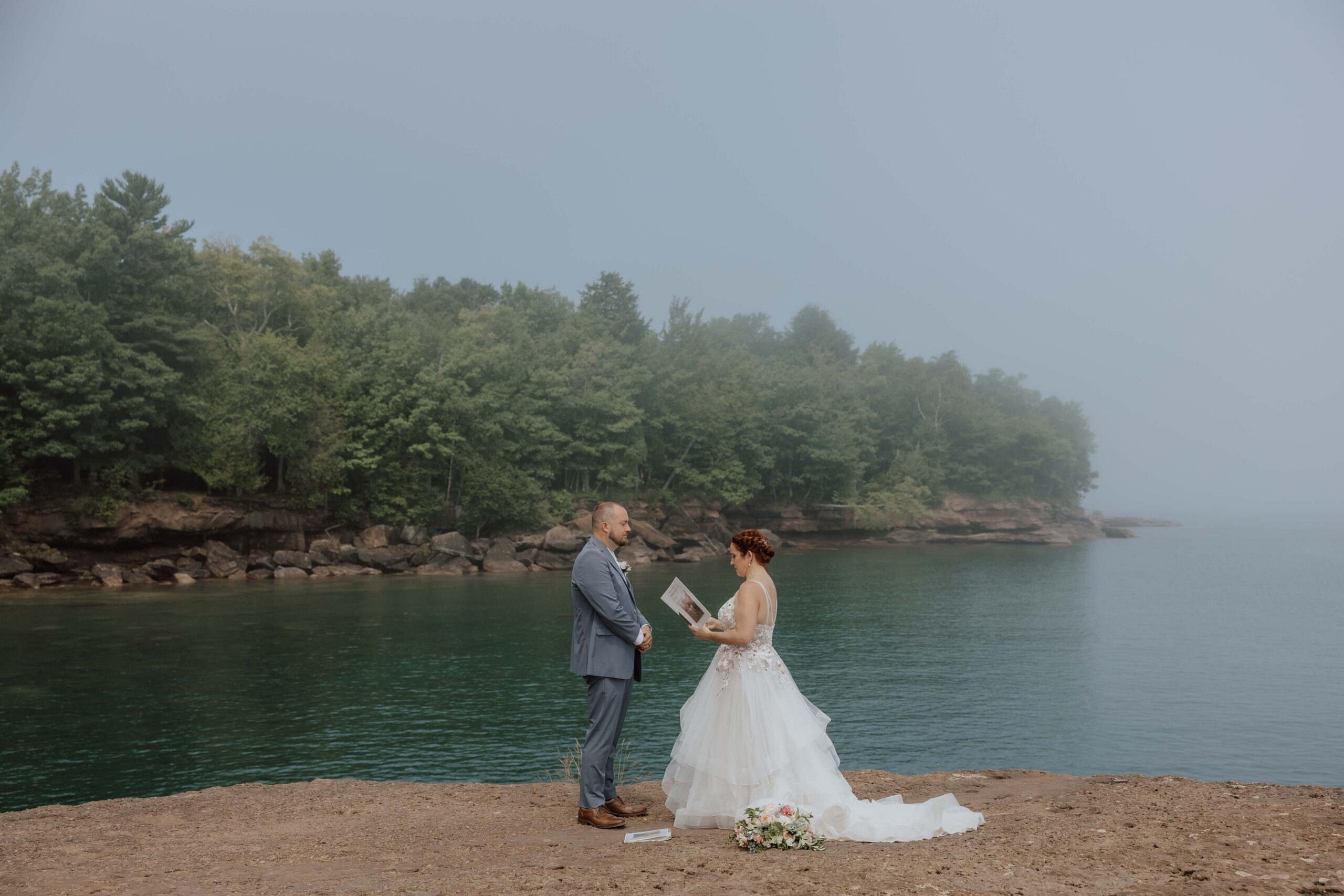
If you have ever looked into self-solemnizing your elopement, you have likely seen that Wisconsin is one of the few states in the country that allows it. However, the legal realities of self-solemnization Wisconsin couples face involve strict rules that make the process far less flexible than states like Colorado.
Before you plan to self-solemnize your marriage ceremony, let’s see if self-solemnizing is actually right for you.
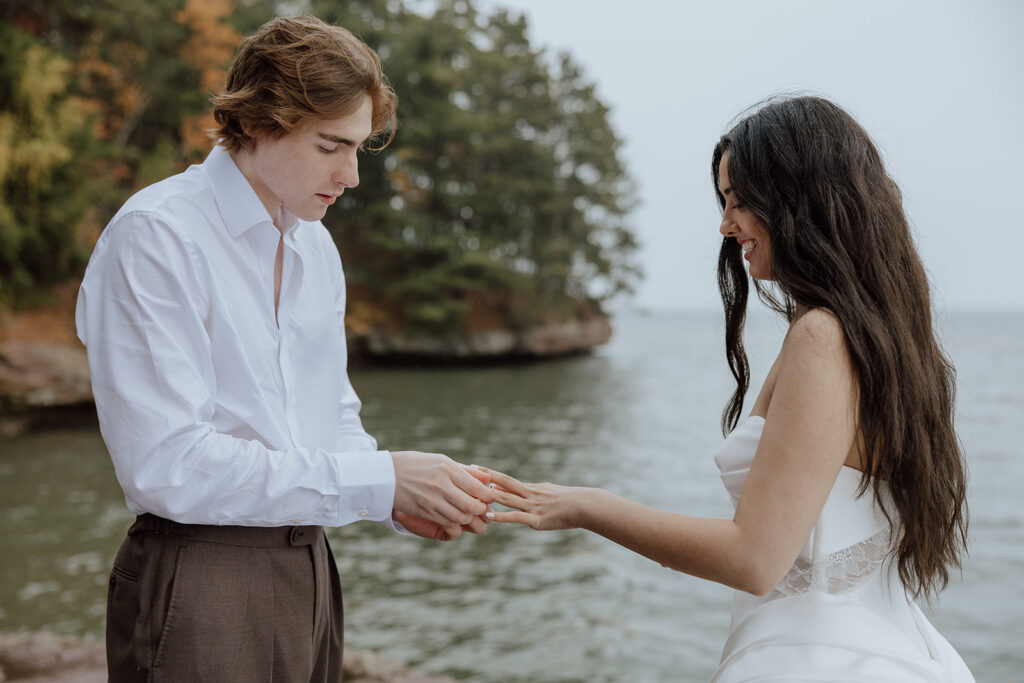
Why you Might Not Want to Self-Solemnize in Wisconsin
The main issue comes down to the state law. Under Wisconsin Statute § 765.16(1m)(c), a couple may solemnize their own marriage: “in accordance with the customs, rules and regulations of any religious society, denomination or sect to which either of the parties may belong.” This clause creates problems for many couples looking into self-uniting ceremonies because…
- It requires genuine religious affiliation. Wisconsin statute does not provide a secular path to self-solemnization. You or your partner must belong to a religion that recognizes weddings performed without an officiant.
- You shouldn’t lie on official paperwork. While county clerks rarely ask for theological proof, claiming you qualify on religious grounds when you don’t, means signing legal paperwork under false pretenses. Falsely swearing on a state marriage application carries legal penalties under Wisconsin law. It’s simply not the best energy to bring into your wedding day.
- County clerks interpret the rule differently. Because Wisconsin doesn’t have a separate self-uniting license, the process depends on the county where you apply. You will apply using the standard marriage application. Some county clerks will simply have you list yourselves as the officiants with little discussion, while others will explicitly question your religious affiliation, warn you about the strict statutory limits, or have you sign an acknowledgment that you meet the legal religious criteria.
- You still need two witnesses. Wisconsin law still requires two competent adult witnesses present to sign the marriage certificate. This is another complication that makes self-solemnizing in Wisconsin different from other states that allow it.
Where Did Self-Solemnization Come From?
The whole concept originated back in 17th-century England with the Religious Society of Friends, better known as the Quakers.
In Quaker belief, God alone joins two people in marriage, not an ordained priest, pastor, or government official. During a traditional Quaker wedding, the couple stands up in front of their community, speaks their promises directly to each other, and everyone in the room signs the certificate as a witness.
When Quakers moved to America, colonial and state laws carved out specific religious exceptions so they could legally marry without violating their faith. Over time, Wisconsin kept that exact religious carve-out on the books, which is why the law looks the way it does today.
Which Religions Actually Practice This?
There are few faith traditions that align with Wisconsin’s legal requirements:
- Quakers (Religious Society of Friends): The community the law was written for. The couple speaks their vows directly to each other during an open meeting.
- The Baháʼí Faith: The Baháʼí tradition doesn’t have professional clergy. The couple recites their vows directly in front of two witnesses approved by their local spiritual assembly.
- Certain Contractual & Independent Traditions: Some traditions view marriage strictly as a covenant directly between the two partners rather than an act performed by an ordained minister.
(Note: While traditions like Roman Catholicism recognize the spouses as the spiritual ministers of the sacrament, standard church law still requires an authorized priest or deacon to witness the marriage, meaning it usually won’t qualify under state rules.)
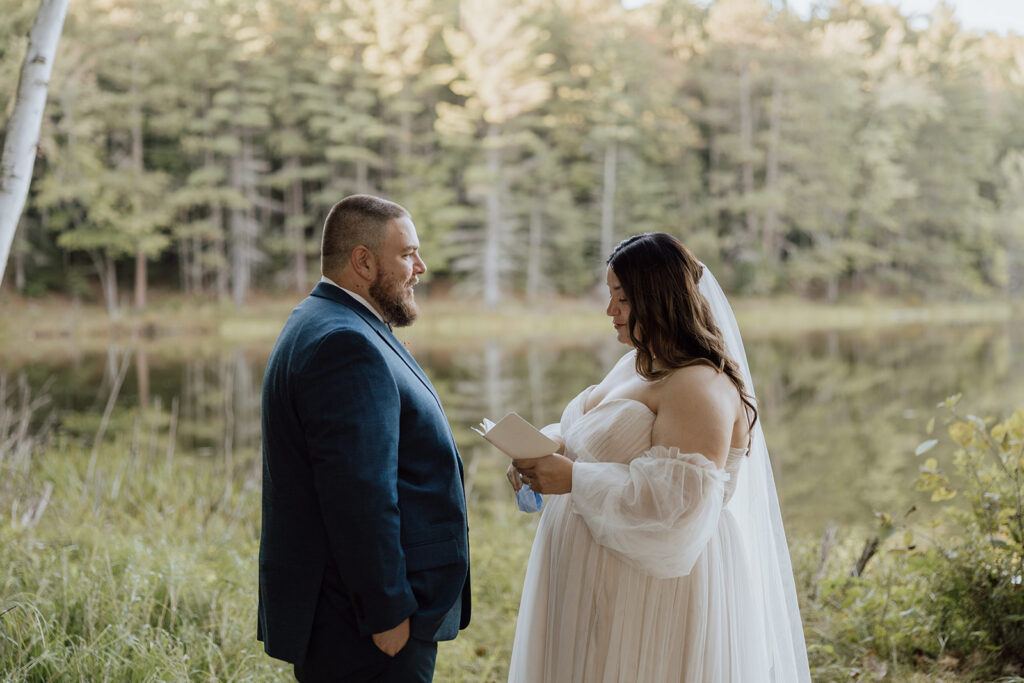
How you can Elope Without Self-Solemnizing in Wisconsin
If you want to elope without an officiant or guests for a private feel, good news! We can still make that happen, sort of. Here are a few ways you can have a private elopement experience without self-solemnizing.
- Let me officiate for you as your photographer. Yes, you can keep your guest list at zero. I am ordained online, which is legally recognized in Wisconsin under state law. You do not need to hire an outside minister or have a stranger standing between you during your vows. I can sign the legal paperwork as your officiant, step back behind the camera, and give you the space to share your private vows without anyone interrupting the moment. As for Wisconsin’s two-witness rule? We can simply ask friendly hikers on the trail to sign the certificate. Hikers love being part of an elopement story, and it takes them less than two minutes.
- Have a close friend get ordained online. If you do want one or two loved ones along for the hike, having a friend get ordained through a group like the American Marriage Ministries takes about two minutes. Wisconsin does not require ministers to register with the state before performing a ceremony.
- Take care of the legal paperwork at the courthouse first. Knock out the official license with a judge or court commissioner a few days before your actual elopement date. Once the paperwork is filed, you can head out into nature and exchange your vows completely on your own terms. No officiant, no witnesses, and zero paperwork stress on the trail.
Your Wisconsin Elopement Photographer who Doubles as your Officiant!
Hey, I’m Abigail! I don’t just show up and photograph your elopement. From inquiry through photo delivery, I help you through every step. From planning out the timeline, recommending hidden gem locations, and guiding you through your day with introvert friendly photography. Tap the link below to book your free consultation call.



LEAVE A COMMENT
Comments